


Sep 02,2026
Dalian Bohai Rubber & Plastics Co., Ltd. Officially Launches Its Complete Vehicle and Construction Machinery Component Supply System
Recently, Dalian Bohai Rubber & Plastics Co., Ltd. formally unveiled a six‑category product classification system, comprehensively showcasing the company’s technological expertise and its capability for large‑scale component supply in the automotive and construction machinery rubber and plastic parts sectors.


Aug 31,2026
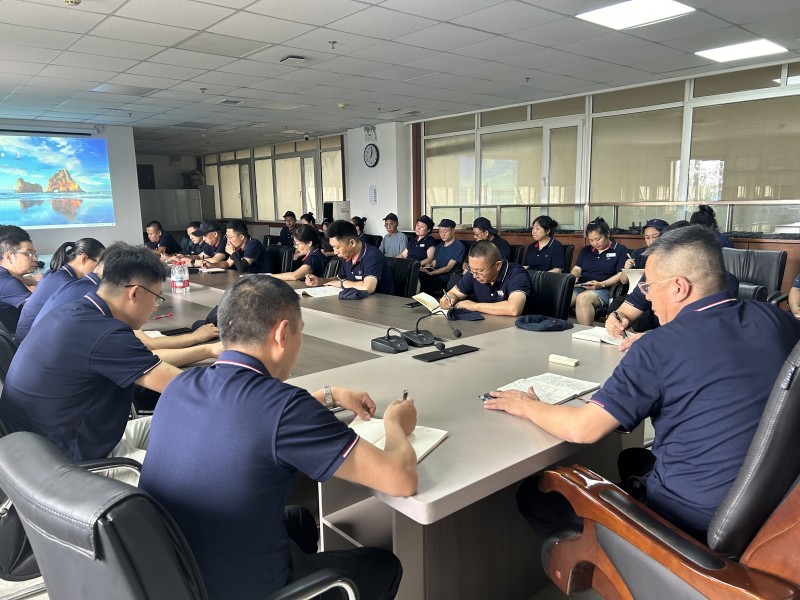
In August, the third phase of training for the Bohai region was carried out as scheduled. To effectively enhance the training’s impact, the Human Resources and Administration Department conducted extensive needs assessments in advance and, in close alignment with the company’s strategic plan for the second half of the year, refined and adjusted the course content to ensure that the training is more closely aligned with frontline operations and better supports real‑world application.

Principle of Measurement for Electronic Analytical Balances
Aug 31,2026
The specific gravity measurement using an electronic analytical balance employs Archimedes’ displacement method, which is the most accurate and widely used technique for determining the density of solid materials in industrial testing. It is extensively applied to the physical‑property evaluation of products such as rubber, plastics, and polymeric materials. The principle of the test is as follows: a precision balance is used to measure the dry mass of the sample in air and its apparent mass when fully immersed in distilled water; by comparing the displaced volume of water with the buoyant force, the true density of the material is calculated with high accuracy.
All staff on duty to ensure production.
Aug 31,2026
Since the beginning of August, the Dalian region has experienced unusually hot weather, with maximum temperatures exceeding 36°C, and the molding workshop has been particularly sweltering. Due to health concerns and other factors, many molding‑line workers have fallen ill, and recruitment efforts are facing multiple challenges, leaving the molding floor severely understaffed.

Common Defects in Rubber Products and Their Causes
Aug 31,2026
The most common defects in the production and inspection of rubber products are:
1. Under‑curing 2. Over‑curing 3. Air bubbles 4. Material shortage or insufficient mold filling 5. Blooming or oil exudation

Aug 28,2026
With more than four decades of dedicated expertise, Dalian Bohai Rubber & Plastic Co., Ltd. specializes in the R&D and manufacturing of rubber and plastic components. Leveraging its mature technological capabilities, stringent quality control, and one-stop customized services, the company delivers reliable sealing and vibration‑damping solutions across a wide range of industries, including automotive, construction machinery, semiconductors, and automation equipment.

Aug 28,2026
Abstract: This study analyzes the effects of constant-speed and variable-speed mixing processes, rotor phase angles, and temperature control in a kneader on mixing efficiency. Compared with constant-speed mixing, a variable-speed mixing process—featuring rapid feed, medium-speed dispersion, and low-speed distribution—can enhance mixing efficiency. For synchronous‑rotor kneaders, a 90° phase angle can improve…
Social Media

Contact Information
Address: No. 39-6-1, No. 2, Gangxing Street, Economic and Technological Development Zone, Dalian City, Liaoning Province
Telephone:0411-88035937
Fax:0411-88035937
E-mail:yudongxin@dlbhxs.com
All Rights Reserved © Dalian Bohai Rubber & Plastics Co., Ltd.
SAF Coolest v1.3.1.2 设置面板 WZOSD-ZNJE-XAASE-ZQA
无数据提示
Sorry, the current column is being updated, please look forward to it!
You can view other columns or returnHome Page